Build your warm database
Start with people you know. Add the business, where you met, and a detail that will help your next conversation.
Build a focused list. Ask better questions. Follow through on what you promise. A simple routine can turn scattered prospecting into a consistent relationship practice.
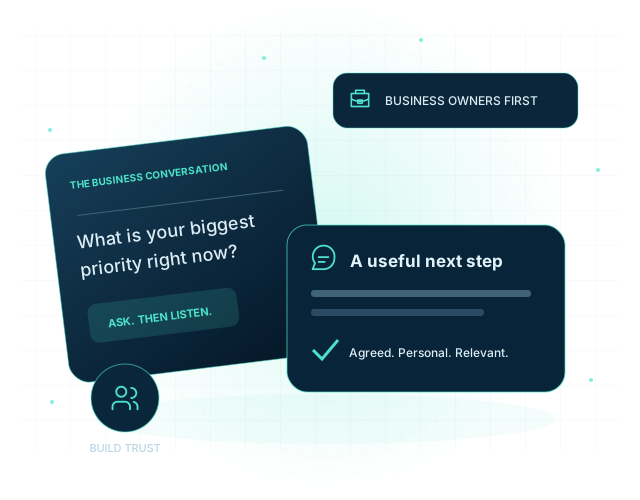
Choose a few repeatable activities before adding more tools or paid campaigns.
Start with people you know. Add the business, where you met, and a detail that will help your next conversation.
Plan two or three thoughtful social posts each week. Answer a real business question or share a relevant learning.
Put local visits or a networking event on your calendar. Match the time and setting to the people you want to meet.
Keep the promise you made, record the response, and agree on a sensible next step. Quality matters more than a fixed touch count.
After delivering value, ask for a specific introduction. Give people clear language they can comfortably forward.
Use a CRM and configured reminders to organize activity. Review your message and audience before turning on campaigns.
Stay with the business-owner conversation here. Use the Partner Program for professional alliances.
“Which business expense would you most like to understand better this year?”
Ask what they have already reviewed, who helps them evaluate options, and what would make a second look worthwhile.
Mention a shared connection, their work, or an actual conversation. Avoid generic praise.
Make it easy to answer. Give them room to explain what matters.
“It sounds like [priority] is what you want to improve. Did I understand that?”
Ask permission to share an overview or introduce a specialist. Agree on when to reconnect.
This is a sample rhythm to adapt to the conversation, not a required sequence or automatic campaign.
Reference the conversation and provide the specific resource.
If appropriate, ask whether it was relevant and offer to clarify.
Send something that directly relates to the priority they mentioned.
Continue, reconnect later, or close the loop. Respect a request to stop.
These drafts focus on business owners and decision-makers. Personalize every placeholder.
The drafts update as you type. Nothing is saved or sent.
Hi [First Name], [Shared Detail] came to mind, and I wanted to check in. How are things going with the business? I’m working with Dreams Business Resources, connecting owners with resources and specialists around business costs, benefits, and growth. I’d enjoy hearing what you’re focused on. [Your Name]
Reconnect as a person first. Only describe an offer when it fits the conversation.
Hi [First Name], I’m [Your Name] with Dreams Business Resources. I noticed [Shared Detail]. We help connect business owners with resources to review areas such as expenses, employee benefits, and potential tax-credit opportunities. Is there an area you are looking to improve, or someone on your team who handles those reviews?
Avoid quoting a savings figure or implying eligibility before an appropriate review.
Hi [First Name], I’m following up on the [resource] we discussed about [Shared Detail]. Was it relevant to what you are working on? If so, we can decide whether a short conversation with the right specialist would be useful. If the timing is off, just let me know. [Your Name]
A useful follow-up has context, a clear question, and room for the person to decline.
Build the habit first, then make it easier to repeat.
Write down one real reason to reconnect. Ask what they are focused on and listen before offering a resource.